Several years ago I bought about 6 new boxes of copper capillary tubing for dirt cheap on eBay thinking I would use it for tiny fuel lines. I believe the inside diameter of the tubing is .040ths. It's sort of in the range that I used to run my little Logan on methanol. But I used a straight piece of copper tubing I bought in a hobby shop that is very thin too. I have some Varian stainless steel capillary tubing that is .010ths but in drips fuel at best in a slow drop drop way, too narrow to use without pressure of some sort if at all.
So I was muddling with running my Logan again but getting the fly tying clamp out to hold the terminal end of the tubing in the side port is pesky. It was a very primitive arrangement. I was thinking about just winding the capillary tubing around the side port and bending it/angle it 90 degrees to the intake just at the lip of the port. So I went to cut the tubing and found it crimps worse than the straight tubing and the hole is very hard to open up again.
I would like to have this tool. ha
Hvac Capillary Tube Cutter
http://www.youtube.com/watch?v=iVpIkNCJZms
Clever method for cutting the really small stuff like Varian gas chromatograph tubing.
http://www.restek.com/pdfs/601-00-001.pdf
http://www.ziggys-tubes-and-wires.com/c ... ubing.html
PS I found a pair of cutters in my garage that looks similar to the tubing cutters, but while leaving a hole in the center it forms the tubing tip into a box/square shape instead of staying round. It has a sprocket on the handle to allow/limit for different sizes or depths. The cutters have the same cutting bevel and angled channels as the ones pictured below. Perhaps they all use the same basic philosophy as the Varian cutting example?
http://www.northwaysmachinery.com/produ ... e%20Cutter
http://www.northwaysmachinery.com/produ ... sp?cat=215
Odds and ends
Moderator: Mike Everman
Re: Odds and ends
Presentation is Everything
Re: Odds and ends
You could blend your own fuels in a jam jar. I just now tried the fit and it does work. Maybe someone will find a combustion use for this application. You can screw a lid on the bottom of your blender too, same threading. ha
"Apparently 40 years ago or so, about the time this blender pictured was bought, manufacturers used to include a mason jar in the box with the blender. Mom recalls even a booklet that listed the many things one could make with the mason jar blender, including ground spices, whipped cream, and peanut butter. We use this trick most often to make whipped cream. The blender whips it right in the jar, so if we have extra, it's already in a jar for storage. And it is easier when it comes to making small quantities."
http://simplyrecipes.com/recipes/tip_bl ... n_jar/#hcw
PS Thin jars and hot foods not recommended. Read comments for more info.
"Apparently 40 years ago or so, about the time this blender pictured was bought, manufacturers used to include a mason jar in the box with the blender. Mom recalls even a booklet that listed the many things one could make with the mason jar blender, including ground spices, whipped cream, and peanut butter. We use this trick most often to make whipped cream. The blender whips it right in the jar, so if we have extra, it's already in a jar for storage. And it is easier when it comes to making small quantities."
http://simplyrecipes.com/recipes/tip_bl ... n_jar/#hcw
PS Thin jars and hot foods not recommended. Read comments for more info.
Presentation is Everything
Re: Odds and ends
I recall this concept some time ago/for review.
Double-Lidded Jar Took Way Too Long To Exist
http://gizmodo.com/390770/double+lidded ... g-to-exist
http://www.businessinsider.com/million- ... ar-2010-10
Double-Lidded Jar Took Way Too Long To Exist
http://gizmodo.com/390770/double+lidded ... g-to-exist
http://www.businessinsider.com/million- ... ar-2010-10
Presentation is Everything
Re: Odds and ends
I always thought it would be fun to make a Klein Bottle jam jar snorkeler by getting the proportions correct.
World's Smallest Klein Bottle
http://www.etsy.com/listing/66353455/wo ... ein-bottle
http://www.etsy.com/listing/67322253/kl ... e-earrings
Made a Klein Bottle resonator though some time ago/old news.
http://www.youtube.com/watch?v=a8q-keIP_ls
World's Smallest Klein Bottle
http://www.etsy.com/listing/66353455/wo ... ein-bottle
http://www.etsy.com/listing/67322253/kl ... e-earrings
Made a Klein Bottle resonator though some time ago/old news.
http://www.youtube.com/watch?v=a8q-keIP_ls
- Attachments
-
Presentation is Everything
Re: Odds and ends
Funny on the second page how they make cheaper corks out of the leftover bits with little pure wafers on either end.
"Cork is a great insulating material, and gives these oaks a chance to survive the forest fires that occasionally happen in the hot Mediterranean summers."
http://www.wineanorak.com/corks/howcorkismade.htm
"While this may seem primitive, wood (in some cases cork) is actually used as an ablative material for some American rocket engine areas and payload shrouds, which heat up as the rocket flies through the atmosphere."
http://webcache.googleusercontent.com/s ... google.com
"An example of a natural material is the oak wood heat shield used on the Chinese FSW reentry vehicles."
http://webcache.googleusercontent.com/s ... google.com
Cork harvesting video - kind of entertaining
http://www.youtube.com/watch?v=ztr-RP0XYd8
http://www.youtube.com/watch?v=ptC9vvbo ... re=related
http://www.youtube.com/watch?v=Lg4q2_VL ... ure=fvwrel
http://www.youtube.com/watch?v=rKlCZYJl2Bc&NR=1
I liked this for the scenery.
http://www.youtube.com/watch?v=nZ1BKu4P424
"Cork is a great insulating material, and gives these oaks a chance to survive the forest fires that occasionally happen in the hot Mediterranean summers."
http://www.wineanorak.com/corks/howcorkismade.htm
"While this may seem primitive, wood (in some cases cork) is actually used as an ablative material for some American rocket engine areas and payload shrouds, which heat up as the rocket flies through the atmosphere."
http://webcache.googleusercontent.com/s ... google.com
"An example of a natural material is the oak wood heat shield used on the Chinese FSW reentry vehicles."
http://webcache.googleusercontent.com/s ... google.com
Cork harvesting video - kind of entertaining
http://www.youtube.com/watch?v=ztr-RP0XYd8
http://www.youtube.com/watch?v=ptC9vvbo ... re=related
http://www.youtube.com/watch?v=Lg4q2_VL ... ure=fvwrel
http://www.youtube.com/watch?v=rKlCZYJl2Bc&NR=1
I liked this for the scenery.
http://www.youtube.com/watch?v=nZ1BKu4P424
Presentation is Everything
Re: Odds and ends
I saw this rum/bottle mentioned in my latest Saveur Magazine and it looked like a good shape for a short snorkeler run, just something for a brief rev up lest it crack. Perhaps the snorkel would be better if just a bit taller, if you added a short extention to it. It has a good "break" transition from bottle to neck, but again perhaps the neck could be a dash longer and/or narrower.
The other day at the Navy base I was perusing the liquor store, looking at the many exotic shaped bottles.
"A muted aroma of brown sugar and milk chocolate with traces of peanut and black pepper. The elegant yet assertive palate entry is firm, peppery, moderately sweet, and cane-like; at midpalate the texture turns silky, semisweet and cocoa-like to the taste, and eminently elegant and sophisticated in style. Finishes sweet, honeyed, medium-bodied, svelte and utterly yummy. Superb/Highly Recommended." Oh!
http://www.ryebrookwines.com/r/products ... t-vsop-rum
I have a bottle of this, and I've wondered if it would try to cycle/sustain if charged with methanol.
http://en.wikipedia.org/wiki/Grand_Marnier
http://www.youtube.com/watch?v=3iVLGT4aXAo
http://www.youtube.com/watch?v=sL2Bn3r4unM
Some cognac bottle that is a true snorkeler. ha
Would be nice to have something artistic like an elephant snorkeler made of fused quartz so that it wouldn't crack.
http://www.worthpoint.com/worthopedia/e ... oix-cognac
PS What's going on here? Maybe some barnacles would add to the "snorkeler" effect. ha
http://www.youtube.com/watch?v=RfDgVqjOLkw
Viewer comment - C'est original !
immersion de bouteilles de vin dans le bassin d'Arcachon
http://www.youtube.com/watch?v=zvpI0b6E ... re=related
The other day at the Navy base I was perusing the liquor store, looking at the many exotic shaped bottles.
"A muted aroma of brown sugar and milk chocolate with traces of peanut and black pepper. The elegant yet assertive palate entry is firm, peppery, moderately sweet, and cane-like; at midpalate the texture turns silky, semisweet and cocoa-like to the taste, and eminently elegant and sophisticated in style. Finishes sweet, honeyed, medium-bodied, svelte and utterly yummy. Superb/Highly Recommended." Oh!
http://www.ryebrookwines.com/r/products ... t-vsop-rum
I have a bottle of this, and I've wondered if it would try to cycle/sustain if charged with methanol.
http://en.wikipedia.org/wiki/Grand_Marnier
http://www.youtube.com/watch?v=3iVLGT4aXAo
http://www.youtube.com/watch?v=sL2Bn3r4unM
Some cognac bottle that is a true snorkeler. ha
Would be nice to have something artistic like an elephant snorkeler made of fused quartz so that it wouldn't crack.
http://www.worthpoint.com/worthopedia/e ... oix-cognac
PS What's going on here? Maybe some barnacles would add to the "snorkeler" effect. ha
http://www.youtube.com/watch?v=RfDgVqjOLkw
Viewer comment - C'est original !
immersion de bouteilles de vin dans le bassin d'Arcachon
http://www.youtube.com/watch?v=zvpI0b6E ... re=related
Presentation is Everything
Re: Odds and ends
World’s first ‘printed’ aircraft, which could revolutionise the economics of aircraft design
http://www.sciencedebate.com/science-bl ... aft-design
http://www.sciencedebate.com/science-bl ... aft-design
Presentation is Everything
Re: Odds and ends
Acoustic Propulsion
http://www.youtube.com/watch?v=je7eLZS6GG0
Acoustic Propulsion Part 2 (measurement of thrust)
http://www.youtube.com/watch?v=uJ8B8k1I ... ideo_title
http://www.youtube.com/watch?v=je7eLZS6GG0
Acoustic Propulsion Part 2 (measurement of thrust)
http://www.youtube.com/watch?v=uJ8B8k1I ... ideo_title
Presentation is Everything
Re: Odds and ends
I made a Lord Kelvin's Thunderstorm device the other day. It's just a few copper fittings, a solid teflon rod and some copper bowls I had from when I lived in Pakistan, stuff laying around the house really. It makes a good 1/4 inch spark and sometimes a 1/3 inch spark, but the interesting thing is how the water builds up a charge as it falls through the copper T-fittings. It makes a spray about a foot in diameter with the smallest droplets, but most of the heavier drops are caught in the bowls. It goes though this cycle of making a steady flowing very narrow beam of water noise to a wide spray pattern of near silence. It will flash a neon bulb or give you a little sparky pop if you touch the various parts. I guess in winter with drier air I could get more out of it. And too, if I insulated the wires with silicone tubing that might help. Even the alligator clip wires act up. In one arrangement a wire was pulled toward the main aluminum T-slot pole over an inch as the charge built up and you can see the wires jerk as the unit is discharged.
I suppose the most notable thing about the water drop experiment is how simple it is. Imagine William Thompson tinkering with his in 1867.
I like this youtube design for it's ultra simplicity.
http://www.youtube.com/watch?v=bHbfQkiu848
This clip inspired me to make one, I kind of copied the copper theme.
http://www.youtube.com/watch?v=MR2Quj2isIo
I suppose the most notable thing about the water drop experiment is how simple it is. Imagine William Thompson tinkering with his in 1867.
I like this youtube design for it's ultra simplicity.
http://www.youtube.com/watch?v=bHbfQkiu848
This clip inspired me to make one, I kind of copied the copper theme.
http://www.youtube.com/watch?v=MR2Quj2isIo
- Attachments
-
-
Last edited by Mark on Wed Aug 10, 2011 1:13 am, edited 3 times in total.
Presentation is Everything
Re: Odds and ends
It might interesting to suspend a pulsejet away from ground and see if you could build up a charge on it and/or between it and an augmentor. Perhaps some thick, very dry 4 X 4 post would do or hang it from a rope as well.
Some static tidbits.
http://www.youtube.com/watch?v=SAiMtnPxlNc
http://www.youtube.com/watch?v=FzsTamPPnHc&NR=1
http://www.youtube.com/watch?v=Xk6CNXuznR0
Some static tidbits.
http://www.youtube.com/watch?v=SAiMtnPxlNc
http://www.youtube.com/watch?v=FzsTamPPnHc&NR=1
http://www.youtube.com/watch?v=Xk6CNXuznR0
Presentation is Everything
Re: Odds and ends
Note the 4:00 to 5:30 minute mark demonstration.
Leyden Jar Capacitor Demonstration, The Dissectible Leyden Jar
http://www.youtube.com/watch?v=P3csPgX3EuU
Leyden Jar Capacitor Demonstration, The Dissectible Leyden Jar
http://www.youtube.com/watch?v=P3csPgX3EuU
Presentation is Everything
Re: Odds and ends
Lord Kelvin's Thunderstorm with Franklin Bells Storm Detector
http://www.youtube.com/watch?v=h4WvZAVQtjk
Just some related subject matter/history I was reading.
"Franklin made use of Gordon's idea by connecting one bell to a pointed rod attached to his chimney and a second bell to ground. This pointed rod discharged electrical energy from heavily charged passing clouds that would cause Franklin's set of Gordon's Bells to ring. Franklin's use of Gordon's Bells for storm detection is extremely dangerous and therefore PV Scientific strongly warns experimenters not to try to replicate it, but our model of Gordon's Bells can be safely demonstrated as an energy conversion device using either a Wimshurst Static Electric Generating Machine or a Van de Graaff generator instead of a charged cloud as the source of static electricity."
http://www.arcsandsparks.com/franklin.html
http://www.youtube.com/watch?v=h4WvZAVQtjk
Just some related subject matter/history I was reading.
"Franklin made use of Gordon's idea by connecting one bell to a pointed rod attached to his chimney and a second bell to ground. This pointed rod discharged electrical energy from heavily charged passing clouds that would cause Franklin's set of Gordon's Bells to ring. Franklin's use of Gordon's Bells for storm detection is extremely dangerous and therefore PV Scientific strongly warns experimenters not to try to replicate it, but our model of Gordon's Bells can be safely demonstrated as an energy conversion device using either a Wimshurst Static Electric Generating Machine or a Van de Graaff generator instead of a charged cloud as the source of static electricity."
http://www.arcsandsparks.com/franklin.html
Presentation is Everything
Re: Odds and ends
"For over 170 years, the Oxford Electric Bell (also known as the Clarendon Dry Pile) has been chiming almost continuously, the composition of its power source uncertain. Currently located in the Clarendon Laboratory at the University of Oxford, the Bell is an experiment consisting of two brass bells each stationed beneath a dry pile battery, with a metal sphere (or 'clapper') swinging between them to produce a ring that has occurred on the order of 10 billion times."
"As the sphere hits one of the bells, the corresponding dry pile battery gives off a small charge thus electrostatically repelling the clapper, causing it to be attracted to the opposite bell. The process repeats with only a tiny amount of charge being carried between the two brass bells, so while a high voltage is required to create the motion, it is only a small drain on the battery, so the dry piles have continued to ring the bell for nearly 170 years, making it one of the longest lasting scientific experiments in the world."
http://atlasobscura.com/place/oxford-electric-bell
Oxford Electric Bell
"The Oxford Electric Bell does not demonstrate perpetual motion. The bell will eventually stop when the dry piles are depleted of charge — that is, if the clapper does not wear out first.[2][3]"
http://en.wikipedia.org/wiki/Oxford_Electric_Bell
"As the sphere hits one of the bells, the corresponding dry pile battery gives off a small charge thus electrostatically repelling the clapper, causing it to be attracted to the opposite bell. The process repeats with only a tiny amount of charge being carried between the two brass bells, so while a high voltage is required to create the motion, it is only a small drain on the battery, so the dry piles have continued to ring the bell for nearly 170 years, making it one of the longest lasting scientific experiments in the world."
http://atlasobscura.com/place/oxford-electric-bell
Oxford Electric Bell
"The Oxford Electric Bell does not demonstrate perpetual motion. The bell will eventually stop when the dry piles are depleted of charge — that is, if the clapper does not wear out first.[2][3]"
http://en.wikipedia.org/wiki/Oxford_Electric_Bell
Presentation is Everything
Re: Odds and ends
I made an electrophorus the other day and have been having fun with the sparks it makes. Basically it's some aluminum foil with a sheet of thin acrylic about a tenth of an inch thick with a disc of aluminum over that. At first I used an aluminum head sanding disc about 5 inches in diameter and that made at best a 2 cm spark and very feeble. Then I decided to use an old Garrard turntable like this one with the strobe markings on the side for the disc and my teflon rod as an insulator to lift it off the acrylic dielectric, which then produces the snappy static sparks. Acetone was used to get the thin black coating off the top of the turntable disc.
I was able to light my propane torch and some butane gas grill type lighters with my electrophorus without clicking the piezo sparker, pulling the trigger just enough to turn on the gas. The turntable disc is fairly heavy, a good hunk of aluminum, not like a more modern turntable I threw away awhile back. The diameter is a little under 12 inches. Some of my sparks have been a good 2 inches long and I took to letting it zap me on the side of my waist to the skin which doesn't really hurt but if you zap your finger or hold a steel sphere in your hand and let it discharge to that, it kind of hurts and you really don't want to do it again. Some sparks are even longer and very faint or sometimes it makes an invisible cracking discharge and then a bright spark as I move it closer to me still. Most sparks however are about 1.5 inches long and pretty poppy sounding.
http://www.classicaudio.ru/static.php?t ... es_garrard
http://en.wikipedia.org/wiki/Garrard_Tr ... _Turntable
So I came across this other electrophorus design where he starts a fire with it too using acetone. I recall trying acetone in a jam jar, I couldn't even get the flame from my lighter to advance into the jar. Acetone is not an easy air/fuel mixture to get right. It evaporates so fast and the window of opportunity is not like methanol.
http://www.ece.rochester.edu/~jones/demos/kamachi.html
Then I was reading some 1700's history about Volta and his exploits with his electrophorus.
"Today it is so common to produce light just by turning a knob or pulling a switch and it
is so easy to produce a flame with a very cheap box of matches or a disposable plastic
gas lighter that we can hardly imagine how problematic it was in the past to obtain the
same effects. The history of fire-making appliances dates back to prehistory and is
marked by a large number of artefacts (tinder, flint and steel, quartzite and iron, matches,
etc.) and methods (friction, chemical, pneumatic, etc.), which were often unreliable,
inconvenient or dangerous."
"In this article I would like to retrace the evolution of a very peculiar fire producing
apparatus which was invented in the late 1770s and remained in use up to the middle of
the 19th century: the hydrogen electric lighter. The first lighter of this kind was conceived
by the famous Italian physicist Alessandro Volta (1745-1827) but subsequently it was
essentially in Germany that this useful device was largely improved and modified. This
lighter became the first electric household appliance, one of the very first “push-button”
(or at least “turn-key”) apparatus."
"However, another Volta’s invention of the late 1770s, the electric lighter2, even if from a purely scientific
point of view it could be considered as a cabinet curiosity, nevertheless became very
popular."
"In Autumn 1776, while still professor of physics in Como, Volta collected a gas the
so-called “aria inffiammabile delle paludi” (methane) bubbling from the water of the
Verbano Lake and soon he discovered this gas was flammable and could be ignited by an
electric spark.3 At the same time Volta was also experimenting with another gas: the
“flammable air” (hydrogen), which he ignited in his famous electric pistols (with all the
possible variations of this quite innocuous laboratory weapon: electric cannons, electric
guns, electric mortars etc.).4 In May 1777, in letter to the Marquis Francesco Castelli, he
mentioned for the first time that he was elaborating a new invention: a methane gas
lamp.5. Almost a year later, in April and May 1778 he wrote a series of letters to the
Geneva naturalist Jean Senebier (1742-1809), in which he mentioned that he had
perfected two kinds of lamp. The first one was burning methane and could produce light
for one hour with a “jar” of gas, while the second one was in fact a hydrogen lighter
(briquet) which could be used for igniting a candle or a waxed wick. The latter was
portable and could be ignited with the spark of a pocket electrophorus (invented by
Volta himself in 1775)."
"Even though Volta never considered his lighter to be one of his major inventions
(even before the invention of the electric cell), nevertheless he was quite proud of it,
considering that it was not only an amusing curiosity but also useful and practical
device."
http://www.sci-ed.org/Conference-Pognana/Brenni.pdf
I decided I wanted to try a larger electrophorus, so I ordered some aluminum plate nearly twice the surface area as the Garrard turntable. I almost ordered the 18 inch stuff but it seemed so heavy to be lifting up and down, but I might at a later date but for now the ~16.5 inch diameter will be fun enough. The nice thing about this aluminum disc is that is supposed to be fairly flat and it doesn't cost that much. I can smooth it more on my big lathe if I want to polish it. The electric charge likes to sneak away fairly quickly if there are any sharp edges. Being flat is key to making a good electrophorus too.
http://www.sandsmachine.com/alumweb.htm
I ordered this book from my library because it seemed so interesting, almost like an old sorcery book - "what manner of sorcery is this?" (I recall reading that phrase in the youtube comments a few times pertaining to various devices.) I wonder how old that phrase is or what piece of literature popularised it?
http://books.google.com/books?id=V8Hq_K ... gn&f=false
I want to beef up my dielectric like the shampoo bottle article where the plastic was treated wtih a corona discharge to get the metalic printing to stick, but also created a great shocking hazard. Apparently you can use various waxes and resins and create a charged material too if you read the Homemade Lightning topic above.
http://www.esdjournal.com/static/shower/shower.html
I'll post some pictures and/or video later.
Here's a couple of youtube videos with very small electrophorus examples.
http://www.youtube.com/watch?v=TO95iGtRVv0
http://www.youtube.com/watch?v=2Fhoi1gumHY&feature=fvst
I was able to light my propane torch and some butane gas grill type lighters with my electrophorus without clicking the piezo sparker, pulling the trigger just enough to turn on the gas. The turntable disc is fairly heavy, a good hunk of aluminum, not like a more modern turntable I threw away awhile back. The diameter is a little under 12 inches. Some of my sparks have been a good 2 inches long and I took to letting it zap me on the side of my waist to the skin which doesn't really hurt but if you zap your finger or hold a steel sphere in your hand and let it discharge to that, it kind of hurts and you really don't want to do it again. Some sparks are even longer and very faint or sometimes it makes an invisible cracking discharge and then a bright spark as I move it closer to me still. Most sparks however are about 1.5 inches long and pretty poppy sounding.
http://www.classicaudio.ru/static.php?t ... es_garrard
http://en.wikipedia.org/wiki/Garrard_Tr ... _Turntable
So I came across this other electrophorus design where he starts a fire with it too using acetone. I recall trying acetone in a jam jar, I couldn't even get the flame from my lighter to advance into the jar. Acetone is not an easy air/fuel mixture to get right. It evaporates so fast and the window of opportunity is not like methanol.
http://www.ece.rochester.edu/~jones/demos/kamachi.html
Then I was reading some 1700's history about Volta and his exploits with his electrophorus.
"Today it is so common to produce light just by turning a knob or pulling a switch and it
is so easy to produce a flame with a very cheap box of matches or a disposable plastic
gas lighter that we can hardly imagine how problematic it was in the past to obtain the
same effects. The history of fire-making appliances dates back to prehistory and is
marked by a large number of artefacts (tinder, flint and steel, quartzite and iron, matches,
etc.) and methods (friction, chemical, pneumatic, etc.), which were often unreliable,
inconvenient or dangerous."
"In this article I would like to retrace the evolution of a very peculiar fire producing
apparatus which was invented in the late 1770s and remained in use up to the middle of
the 19th century: the hydrogen electric lighter. The first lighter of this kind was conceived
by the famous Italian physicist Alessandro Volta (1745-1827) but subsequently it was
essentially in Germany that this useful device was largely improved and modified. This
lighter became the first electric household appliance, one of the very first “push-button”
(or at least “turn-key”) apparatus."
"However, another Volta’s invention of the late 1770s, the electric lighter2, even if from a purely scientific
point of view it could be considered as a cabinet curiosity, nevertheless became very
popular."
"In Autumn 1776, while still professor of physics in Como, Volta collected a gas the
so-called “aria inffiammabile delle paludi” (methane) bubbling from the water of the
Verbano Lake and soon he discovered this gas was flammable and could be ignited by an
electric spark.3 At the same time Volta was also experimenting with another gas: the
“flammable air” (hydrogen), which he ignited in his famous electric pistols (with all the
possible variations of this quite innocuous laboratory weapon: electric cannons, electric
guns, electric mortars etc.).4 In May 1777, in letter to the Marquis Francesco Castelli, he
mentioned for the first time that he was elaborating a new invention: a methane gas
lamp.5. Almost a year later, in April and May 1778 he wrote a series of letters to the
Geneva naturalist Jean Senebier (1742-1809), in which he mentioned that he had
perfected two kinds of lamp. The first one was burning methane and could produce light
for one hour with a “jar” of gas, while the second one was in fact a hydrogen lighter
(briquet) which could be used for igniting a candle or a waxed wick. The latter was
portable and could be ignited with the spark of a pocket electrophorus (invented by
Volta himself in 1775)."
"Even though Volta never considered his lighter to be one of his major inventions
(even before the invention of the electric cell), nevertheless he was quite proud of it,
considering that it was not only an amusing curiosity but also useful and practical
device."
http://www.sci-ed.org/Conference-Pognana/Brenni.pdf
I decided I wanted to try a larger electrophorus, so I ordered some aluminum plate nearly twice the surface area as the Garrard turntable. I almost ordered the 18 inch stuff but it seemed so heavy to be lifting up and down, but I might at a later date but for now the ~16.5 inch diameter will be fun enough. The nice thing about this aluminum disc is that is supposed to be fairly flat and it doesn't cost that much. I can smooth it more on my big lathe if I want to polish it. The electric charge likes to sneak away fairly quickly if there are any sharp edges. Being flat is key to making a good electrophorus too.
http://www.sandsmachine.com/alumweb.htm
I ordered this book from my library because it seemed so interesting, almost like an old sorcery book - "what manner of sorcery is this?" (I recall reading that phrase in the youtube comments a few times pertaining to various devices.) I wonder how old that phrase is or what piece of literature popularised it?
http://books.google.com/books?id=V8Hq_K ... gn&f=false
I want to beef up my dielectric like the shampoo bottle article where the plastic was treated wtih a corona discharge to get the metalic printing to stick, but also created a great shocking hazard. Apparently you can use various waxes and resins and create a charged material too if you read the Homemade Lightning topic above.
http://www.esdjournal.com/static/shower/shower.html
I'll post some pictures and/or video later.
Here's a couple of youtube videos with very small electrophorus examples.
http://www.youtube.com/watch?v=TO95iGtRVv0
http://www.youtube.com/watch?v=2Fhoi1gumHY&feature=fvst
Presentation is Everything
Re: Odds and ends
I liked these photos on Flickr, another way to make sparks or an unusual pulsejet ignition system perhaps. If you click the slideshow effect all the interesting designs will be presented to you effortlessly. Look how simple most of the materials are.
http://www.flickr.com/photos/12049698@N ... 122106984/
Imagine the creativity involved in all these designs, who would have thought there could be so many variations on a few themes? Some are so strikingly odd.
http://www.coe.ufrj.br/~acmq/electrostatic.html
A few examples ...
http://www.coe.ufrj.br/~acmq/clarke.html
http://www.coe.ufrj.br/~acmq/pecherb1.jpg
http://www.coe.ufrj.br/~acmq/karlb.jpg
http://www.coe.ufrj.br/~acmq/shaking.jpg http://www.coe.ufrj.br/~acmq/shakesphere.gif
http://www.coe.ufrj.br/~acmq/eln2806.jpg
http://www.coe.ufrj.br/~acmq/pneumatic/
http://www.coe.ufrj.br/~acmq/dirod.jpg
http://www.flickr.com/photos/12049698@N ... 122106984/
Imagine the creativity involved in all these designs, who would have thought there could be so many variations on a few themes? Some are so strikingly odd.
http://www.coe.ufrj.br/~acmq/electrostatic.html
A few examples ...
http://www.coe.ufrj.br/~acmq/clarke.html
http://www.coe.ufrj.br/~acmq/pecherb1.jpg
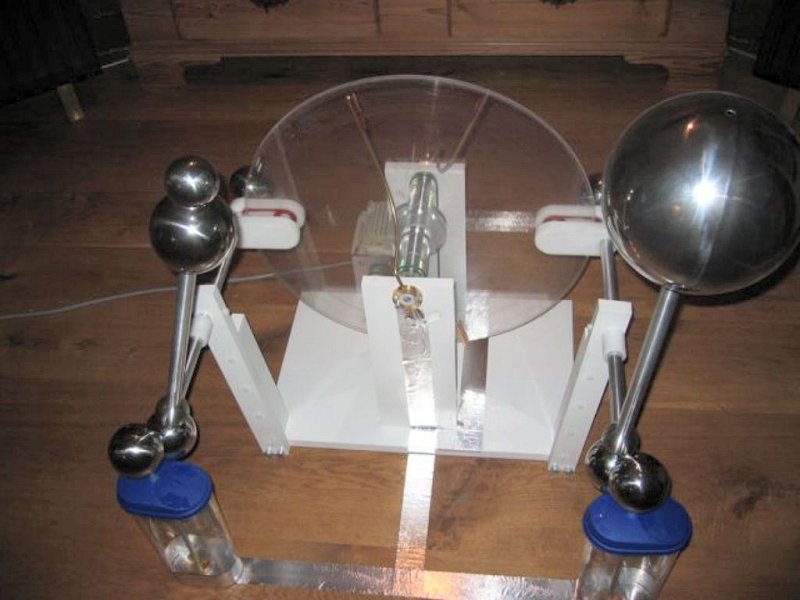
http://www.coe.ufrj.br/~acmq/karlb.jpg
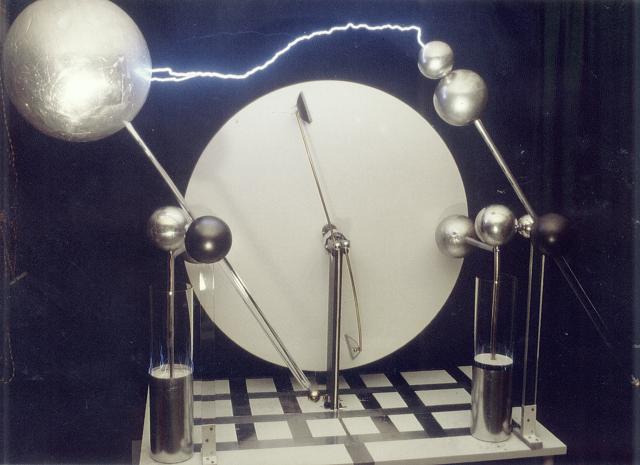
http://www.coe.ufrj.br/~acmq/shaking.jpg http://www.coe.ufrj.br/~acmq/shakesphere.gif
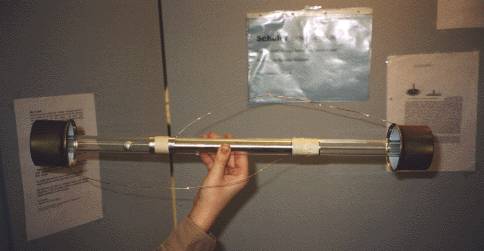
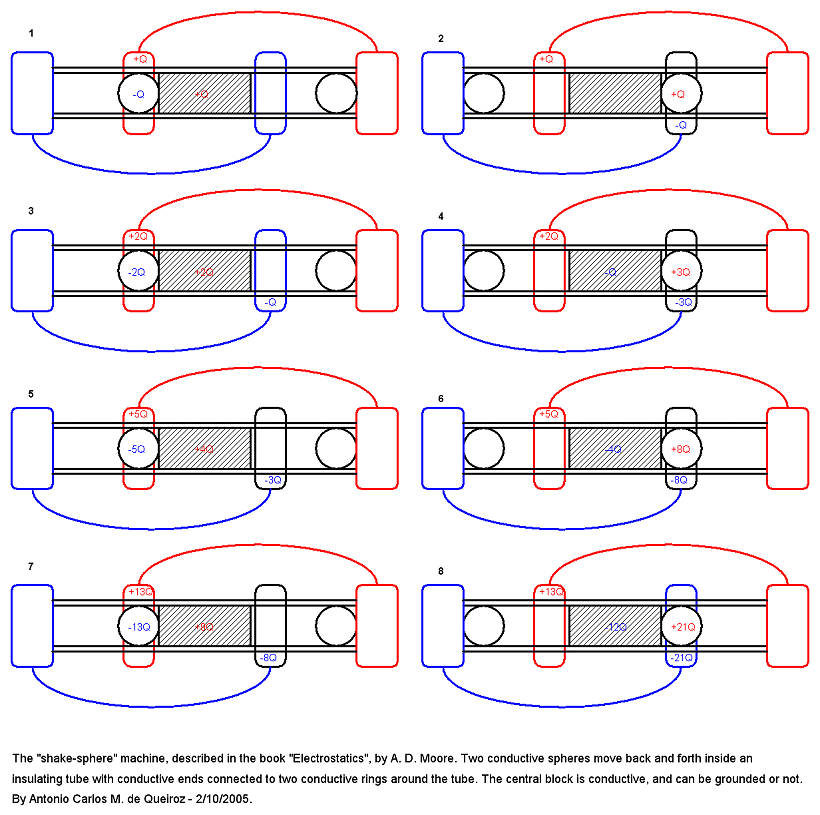
http://www.coe.ufrj.br/~acmq/eln2806.jpg
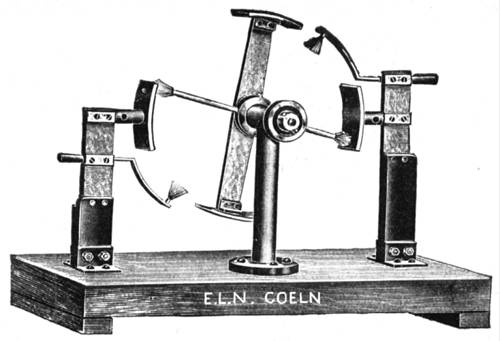
http://www.coe.ufrj.br/~acmq/pneumatic/
http://www.coe.ufrj.br/~acmq/dirod.jpg

Presentation is Everything